Hannah Baker’s despair
Thirteen Reasons WhyHannah Baker’s despair is a growing, consequential state rather than a reaction to one isolated event: as her trust in other people and her sense of control erode, thoughts of giving up shift from a frightening possibility to a prospect she can imagine as hopeful. The novel makes that progression visible through concrete warnings—a withdrawn survey, a repeated note about suicide, a gift of her bicycle, and a direct appeal for help—whose significance becomes clearer as they accumulate.
Loss of Control and Isolation
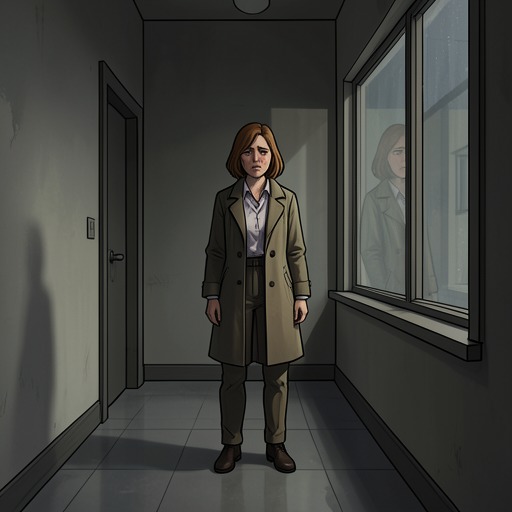
In the school office, Hannah recognizes that other people do not know the truth of her life and that a photograph can create an entirely false account of a shared moment. The realization shakes her understanding of the world. She likens her experience to driving on a rough road as the steering wheel jerks out of control: she can pull herself back briefly, but repeated efforts to stay on course become exhausting. The image gives her despair a particular shape—not simply sadness, but the weariness of being repeatedly thrown off balance while having little control over what happens next.
The Valentine’s Day survey intensifies that fear. Hannah wonders whether boys who see her name on their lists will use the survey as an excuse to ask her out, and whether rumors will make them more eager to test what they have heard. The ballot box offers an immediate, physical choice: she could lift the lid and remove her survey, then tell Mrs. Benson she was embarrassed. She instead tries to reassure herself that the survey is only a joke and that no one will use it. Yet she also imagines the consequences if she has judged the danger correctly. She might shrug it off, become angry, or let go and give up. For the first time, giving up carries a glimmer of hope.
Warning Signs and Unanswered Signals
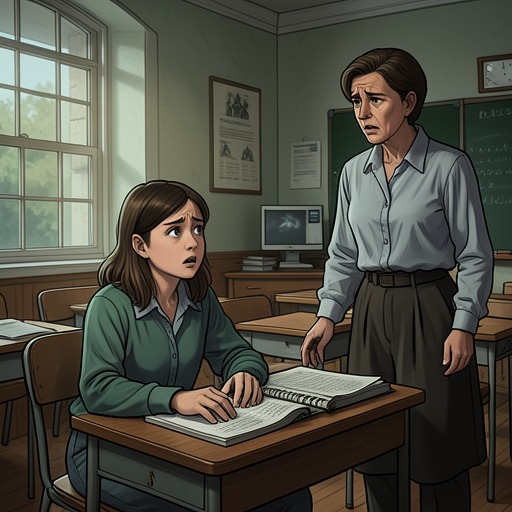
Hannah’s despair also appears in the gap between what she tries to communicate and what other people recognize. In class, a spinning bookrack holds paper bags for anonymous notes about teaching and suggestions for discussion topics. Hannah writes a note to Mrs. Bradley saying she has been thinking about suicide, though not too seriously. The sentence is not an impulsive scrawl: she writes it over and over, throwing away or crumpling each attempt before finally delivering one. The effort makes the note itself a measure of hesitation and a request she can barely bring herself to state plainly.
The class does not turn that opening into the discussion she hoped for. Earlier notes had proposed subjects such as abortion, family violence, and cheating, without anyone demanding the writer’s identity; the suggestion of suicide, by contrast, prompts a demand for specifics. Mrs. Bradley responds with local statistics and explains that a young person’s suicide might not be reported if it occurred privately, leaving a death to be understood as an accident and the community unaware of what was happening. Yet a thorough discussion never begins. The episode connects Hannah’s private thought to a broader failure of recognition: information is offered, but her own distress is not met with a sustained conversation.
A later conversation with Mr. Porter makes the need for recognition more explicit. Hannah says she wants life to stop, and the account insists that she wants him to notice what she has said and help her. When he asks whether anything happened that might be illegal, she answers that she does not think so, but cannot say with certainty. Mr. Porter offers two possible paths: confronting the boy involved, or moving on. The exchange leaves her uncertainty visible rather than resolving it, and its stark alternatives underline how much depends on whether a plea is heard as a signal of danger or treated as a problem with a short list of solutions.
Escalating Risk and Missed Recognition
Hannah’s despair is not conveyed only through her own reflections; it becomes legible in changes and gestures that others could have recognized as warnings. When she gives Tony her bicycle, she offers no clear reason beyond saying she is done with it. Tony later identifies the gift as a sign he missed. Its practical explanation—that he might need a backup if his old car broke down—does not erase its significance: a possession is being handed away, while the giver’s distress remains difficult to read.
The gap between warning and response sharpens when Hannah speaks with Mr. Porter. She says she wants life to stop, and the narration emphasizes that she wants him to notice and help. Asked whether something happened that might be considered illegal, she says she does not think so, but cannot be certain. Mr. Porter proposes confronting the boy or moving on. The exchange leaves the underlying uncertainty unresolved; its importance lies in the contrast between Hannah’s effort to make her distress visible and the limited choices offered in reply.
From Possibility to Plan
The progression from despair to danger becomes unmistakable when Hannah’s thoughts about giving up acquire a means and a timetable. She considers pills, though she has not decided which kind or how many, and says she has little time left to figure it out because she intends to act the next day. The uncertainty about the method does not make the intention abstract: the stated deadline turns an existing thought into an imminent plan.
That plan follows a longer erosion of trust and agency, not a single cause. Hannah recalls feeling that she was the only person who cared about her, and wonders whether she will ever regain control of her life or stop being pushed around by people she trusts. The narrative places these thoughts beside earlier moments when she still pulled herself back from despair, making the later timetable a grave change in degree: what once appeared as a possible release has become a decision she expects to carry out.
The encounters involving Clay and the boy Hannah later discusses with Mr. Porter add painful complications to this account without reducing it to one explanation. Hannah remembers telling Clay to stop and stopping her hands from pulling him closer. In another scene, she describes being unable to say no or push the boy’s hand away, turning her head, clenching her teeth, and fighting tears while he tells her to relax. She later questions whether what happened could be considered rape and says she does not know. These scenes present distress, uncertainty, and compromised agency; they do not establish that one incident alone caused her despair.
The novel’s structure makes the warnings accumulate retrospectively. Hannah’s note to Mrs. Bradley, the gift of the bicycle that Tony recognizes as a sign, her expressed wish for life to stop, and the plan involving pills become connected pieces of a crisis that those around her did not fully understand in time. Her despair is therefore both an inward experience and a failure of recognition around her: signals are given, but the responses do not become the sustained help she is seeking.